
Post
ASUS ZenBook 14X OLED Review: Premium OLED in a Compact Package
May
The ASUS ZenBook 14X OLED is a carefully positioned product in today’s highly competitive laptop market. It reflects ASUS’s understanding of what its target audience values most, and delivers a coherent set of specifications, features, and trade-offs that make sense for the users it’s designed to serve. Whether you’re evaluating this machine for work, study, creative projects, or everyday computing, this comprehensive review will help you determine whether it belongs on your shortlist.
## First Impressions and Design Language
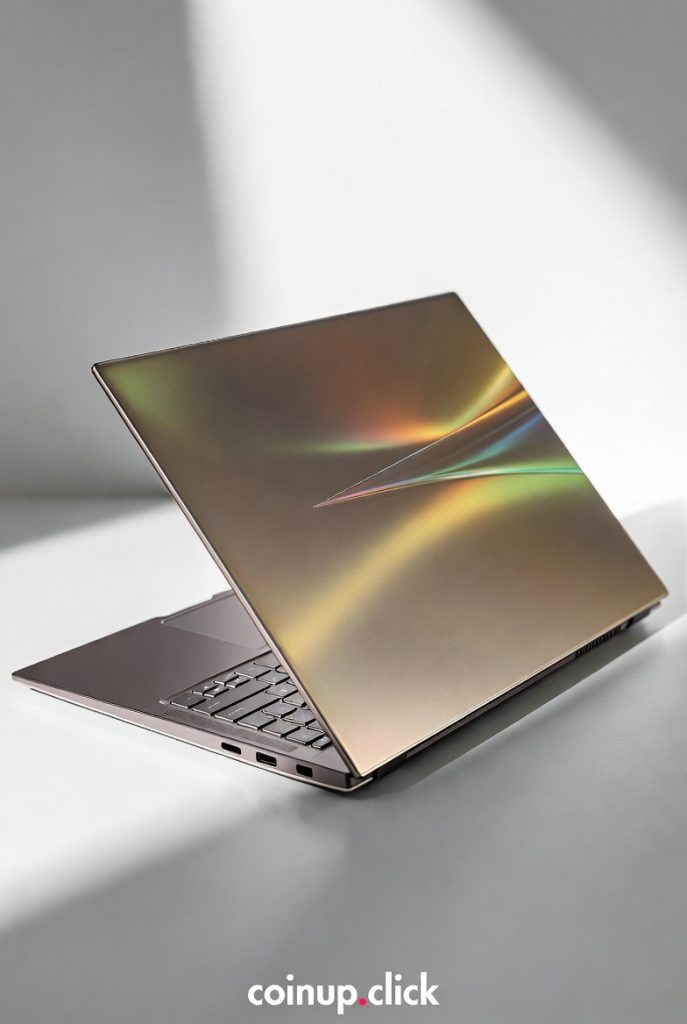
Unboxing the ASUS ZenBook 14X OLED reveals a machine that balances consumer premium aesthetics with productivity design choices. The design language reflects ASUS’s current aesthetic direction, and the build materials chosen are appropriate for the price point and intended use case. Structural rigidity is solid, which suits its compact form factor. Ergonomic considerations include a comfortable palmrest area, well-positioned ports, and a hinge that allows the display to open to a comfortable working angle.
The keyboard experience on the ASUS ZenBook 14X OLED is one of its defining characteristics. Key travel is comfortable with good travel, and the feedback is pleasant for daily work. For users who spend significant time typing — whether writing documents, coding, or composing emails — the keyboard quality significantly impacts daily satisfaction. The touchpad is large and smooth, handling gestures and precision cursor movements with reliable performance.
## Display Performance and Visual Quality
The 14.5-inch 2.8K OLED 120Hz 16:10 display on the ASUS ZenBook 14X OLED is optimized for its intended primary use cases. Resolution determines pixel density and sharpness, while the panel technology affects color accuracy, viewing angles, and power consumption. The ASUS ZenBook 14X OLED’s display covers a substantial portion of the sRGB color space, delivering accurate and vibrant colors for content consumption, productivity tasks, and creative work.
Brightness levels are sufficient for indoor use, with the anti-glare coating managing reflections effectively in typical environments. The display bezels are managed appropriately, contributing to the overall screen-to-body ratio. Whether the display earns praise or merely acceptance depends heavily on the user’s expectations at this price tier.
## Processing and Everyday Performance
At the heart of the ASUS ZenBook 14X OLED is the Intel Core i7 H-series, providing the computational muscle for day-to-day tasks and more demanding workloads. The processor’s performance characteristics — clock speeds, core count, cache size, and efficiency — determine how the laptop handles everything from simple web browsing to complex multitasking scenarios.
For typical everyday tasks including web browsing with multiple tabs, document editing in office suites, video streaming, and email management, the ASUS ZenBook 14X OLED performs smoothly and responsively. Application launch times are reasonable, and task switching is handled without perceptible delays. More demanding workloads take more time but are completed without system instability.
The Intel Iris Xe integrated handles graphics requirements for the primary use cases this laptop targets. Users who engage in creative work, light gaming, or multimedia production will find the graphics performance either adequate or limiting depending on the complexity of their projects.
## Memory, Storage, and System Responsiveness
System memory and storage configuration determine how many applications can run simultaneously and how quickly data is accessed. The ASUS ZenBook 14X OLED’s memory allocation provides adequate headroom for multitasking within its intended use case. The storage solution — whether SSD, eMMC, or HDD — directly impacts how quickly the system boots, how fast applications launch, and how responsive the overall experience feels.
Users who push storage capacity limits with large media collections, extensive game libraries, or high-resolution project files should plan storage needs carefully before purchasing, as expansion options vary by configuration.
## Battery Life: The Portability Factor
True portability depends not just on physical size and weight but on how long the laptop can operate unplugged. The ASUS ZenBook 14X OLED delivers battery performance appropriate to its hardware and form factor. Light use scenarios — primarily text-based productivity and web browsing — yield the best battery results, while video playback and more demanding tasks consume energy more quickly.
The charging solution provided balances charge speed with charger portability, and the ASUS ZenBook 14X OLED supports power levels appropriate for its battery capacity. For students moving between classes, professionals working remotely, or travelers, understanding the realistic battery behavior under your specific workloads is essential for planning.
## Connectivity and Port Selection
Modern laptops must balance port selection with chassis size constraints, and the ASUS ZenBook 14X OLED navigates this trade-off with typical user needs, balancing modern connectivity with chassis constraints. Available ports cover essential connectivity needs, including USB options for peripherals and accessories, display output for connecting to external monitors, audio for headphones or speakers, and wireless connectivity via Wi-Fi and Bluetooth.
Network performance via Wi-Fi supports the bandwidth demands of video conferencing, cloud services, and streaming, which are increasingly central to both work and personal computing. The wireless implementation in the ASUS ZenBook 14X OLED delivers reliable connectivity performance in typical home and office environments.
## Software Experience and Ecosystem
The operating system and pre-installed software shape the daily experience of using the ASUS ZenBook 14X OLED. System updates, security features, and built-in productivity tools contribute to the overall software ecosystem value. ASUS’s own software additions, where present, range from useful to merely present, depending on whether they serve the user’s actual workflow needs.
Application compatibility and availability on the platform may be a consideration for users with specific software requirements. The software experience is generally well-optimized for the hardware configuration, which helps the system feel more responsive than raw specifications alone might suggest.
## Who Benefits Most From the ASUS ZenBook 14X OLED?
The ideal user for the ASUS ZenBook 14X OLED is someone whose computing needs align well with what this machine offers. Students who need a reliable, affordable laptop for coursework and online learning will appreciate the balance of performance and value. Professionals who need basic productivity capabilities in a portable package find the lightweight and efficient design convenient. Users entering a new computing ecosystem or replacing an aging device find the ASUS ZenBook 14X OLED a low-risk, high-satisfaction option.
Users whose workloads regularly exceed what the ASUS ZenBook 14X OLED handles gracefully — including heavy video editing, 3D modeling, high-fidelity gaming, or large dataset analysis — would be better served by higher-specification alternatives. Understanding the honest boundaries of any laptop is as important as appreciating its strengths.
## Final Assessment
The ASUS ZenBook 14X OLED delivers on its core promise: a capable, appropriately designed laptop for its target audience at its given price point. It makes sensible trade-offs, avoids the temptation to oversell its capabilities, and provides a day-to-day computing experience that satisfies the users it was designed for. As one of ASUS’s entries in this market segment, it upholds the brand’s reputation for building laptops that work dependably and serve their owners well over time. For buyers whose needs are well-matched to what the ASUS ZenBook 14X OLED offers, it represents a purchase decision that’s difficult to fault.
